

A boiler feed pump plays an important role in maintaining a reliable water supply to an industrial boiler. However, the requirements for a high pressure multistage boiler feed pump can vary significantly depending on the boiler system, operating conditions and application.
A pump designed for a power plant may also be suitable for certain industrial boiler applications, provided its hydraulic performance, materials and operating limits meet the actual requirements. The right selection depends on more than the industry name alone.
For pump buyers and engineers, understanding these differences helps improve operating reliability, energy efficiency and maintenance planning.
1. What Determines Boiler Feed Pump Performance?
A multistage centrifugal pump develops high head through multiple impellers. It is commonly selected for applications where the required discharge pressure cannot be achieved economically with a single-stage pump.
Several factors determine its performance and suitability:
- Flow rate: The required feedwater delivery rate under normal and peak operating conditions.
- Total head: The energy required to overcome system pressure, elevation differences and hydraulic losses.
- Operating temperature: Feedwater temperature affects pump material selection, sealing arrangements and suction conditions.
- NPSH: Adequate suction conditions are essential to reduce cavitation risk, particularly when handling hot feedwater.
- Efficiency: Pump efficiency depends on the selected duty point and the pump's performance curve.
- Reliability: Continuous operation, load variations, maintenance access and standby arrangements all influence equipment selection.
These parameters should be evaluated together. Selecting a pump based on maximum head or flow alone may result in inefficient operation or unsuitable operating conditions.
2. Boiler Feed Pump Requirements in Different Industries
Power Generation
Power generation facilities, particularly thermal power plants, require reliable boiler feedwater delivery to support steam generation.
Depending on the plant design, boiler feed pumps may operate under high-pressure conditions, with demanding flow requirements and extended operating periods.
Key selection considerations include:
- Required flow rate and discharge head across the operating range.
- Stable operation under changing plant loads.
- Pump efficiency near the expected duty points.
- Mechanical reliability and maintenance accessibility.
- Suitable sealing, bearing and cooling arrangements.
In these applications, pump selection should account for the complete feedwater system, including the boiler operating pressure, feedwater temperature, deaerator conditions and system layout.
For large power generation projects, the pump configuration and performance requirements should be confirmed against the project's technical specifications.
Petrochemical and Refining
Petrochemical plants and refineries use industrial boilers and steam systems for various process and utility requirements.
The demands on a boiler feed pump depend on the steam system design, operating pressure, feedwater conditions and process continuity requirements.
Important considerations include:
- Compatibility of pump materials with the specified feedwater.
- Operating temperature and suction conditions.
- Sealing arrangements and leakage control.
- Reliability during extended operation.
- Maintenance requirements and equipment availability.
It is important to distinguish boiler feedwater service from chemical process liquid transfer.
A pump handling corrosive process chemicals is not automatically suitable for boiler feedwater service, and a boiler feed pump should not be selected for corrosive chemical duty without a separate engineering assessment.
Material selection must be based on the actual liquid composition, temperature and operating conditions.
Industrial Boiler Systems
Industrial boilers are widely used in manufacturing facilities, including food processing, textile production and paper manufacturing.
Although these industries have different production processes, their boiler feedwater systems generally require properly treated water delivered at the required flow and pressure.
Their pump requirements may differ according to:
- Boiler capacity and steam demand.
- Feedwater temperature and inlet pressure.
- Operating load variations.
- Daily operating hours and start-stop frequency.
- Installation space and maintenance access.
For facilities with varying steam demand, the pump should be selected according to the actual operating range rather than only the maximum design flow.
Where demand changes frequently, appropriate pump sizing and control strategies can help reduce unnecessary energy consumption.
The cleanliness and quality of boiler feedwater should be maintained according to the boiler system's water treatment requirements.
Paper fibers, process slurry and other production materials belong to separate process pumping duties, not normal boiler feedwater service.
3. How Operating Conditions Affect Pump Design
Different boiler feedwater applications may require different pump configurations, materials and auxiliary systems.
Hydraulic Design
The required flow rate and total head are the starting points for pump selection.
A multistage centrifugal pump can be configured with multiple impellers to achieve the required head. However, the number of stages and hydraulic design should be determined by the specified duty point and operating range.
The selected pump should operate within its recommended operating limits.
Materials and Corrosion Resistance
Pump material selection should consider feedwater chemistry, temperature, pressure and potential corrosion mechanisms.
Different materials may be considered depending on the service requirements, but stainless steel or other corrosion-resistant materials should not be specified solely because a pump is used in the chemical industry.
Material compatibility needs to be evaluated for the actual operating conditions.
Shaft Sealing and Auxiliary Systems
Shaft sealing arrangements should be selected according to pump design, temperature, pressure and leakage requirements.
Depending on the application, additional provisions may be required for sealing, cooling, lubrication, instrumentation or other auxiliary systems.
These requirements should be confirmed during technical clarification and engineering design.
Pump Configuration and Maintenance
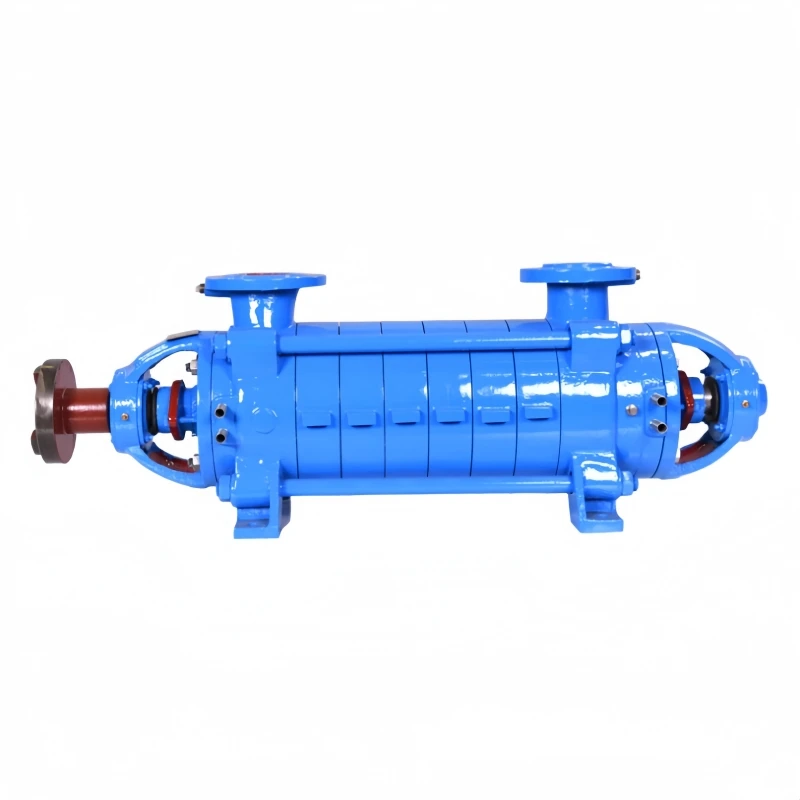
Horizontal multistage pumps are available in different structural configurations.
The choice between a segmented multistage design, a self-balancing configuration or an API 610 pump arrangement depends on hydraulic requirements, mechanical design, applicable specifications and maintenance preferences.
A self-balancing design may be considered where axial thrust management is an important design consideration. Its suitability should be verified for the specific model and duty conditions.
4. Boiler Feed Pumps vs. Mining Dewatering Pumps
Although both applications may require high-head multistage centrifugal pumps, their operating requirements can be substantially different.
Boiler feed pumps are generally selected for properly treated feedwater, with emphasis on hydraulic performance, suction conditions, temperature limits and reliable operation.
Mining dewatering pumps may need to handle water containing suspended mineral particles and abrasive solids.
For example, SanchangPump's mining horizontal multistage centrifugal pump range is designed for mine dewatering applications, with published specifications including:
- Flow rate: 3.7–800 m³/h
- Head: 49–1,000 m
- Liquid temperature: Up to 80°C
- Solids handling: Up to 1.5% volume concentration, with particle sizes up to 0.5 mm, subject to the specified product conditions
These specifications apply to the mining pump range and must not be interpreted as boiler feed pump capabilities.
For abrasive mine water, wear resistance and solids handling are important considerations. For boiler feedwater, suction performance, thermal conditions and the required duty point generally receive greater attention.
If a mining facility also operates a boiler, the dewatering system and boiler feedwater system should be evaluated as separate pumping duties.
5. How to Select the Right High Pressure Multistage Boiler Feed Pump
Before requesting a quotation, buyers should prepare the following technical information.
1. Required flow rate
Provide normal, minimum and maximum flow requirements, where available.
2. Required head or discharge pressure
Specify the required differential head or pressure conditions, including inlet pressure and relevant system losses.
3. Feedwater temperature
Provide normal and maximum operating temperatures, together with suction conditions.
4. Feedwater quality
Confirm the water chemistry and treatment conditions, including any relevant material compatibility requirements.
5. Operating profile
Indicate continuous or intermittent operation, load variations, start-stop frequency and standby requirements.
6. Project specifications
Provide the applicable design standards, motor requirements, sealing requirements, installation conditions and inspection or testing requirements.
With these details, the pump supplier can evaluate the appropriate pump configuration, performance curve, motor rating and auxiliary systems.
6. High Pressure Multistage Boiler Feed Pump Solutions from SanchangPump
Hunan Sanchang Pump Co., Ltd. has manufactured industrial pumps since 2003, providing standard and customized solutions for demanding applications in power generation, mining, chemical processing and other industries.
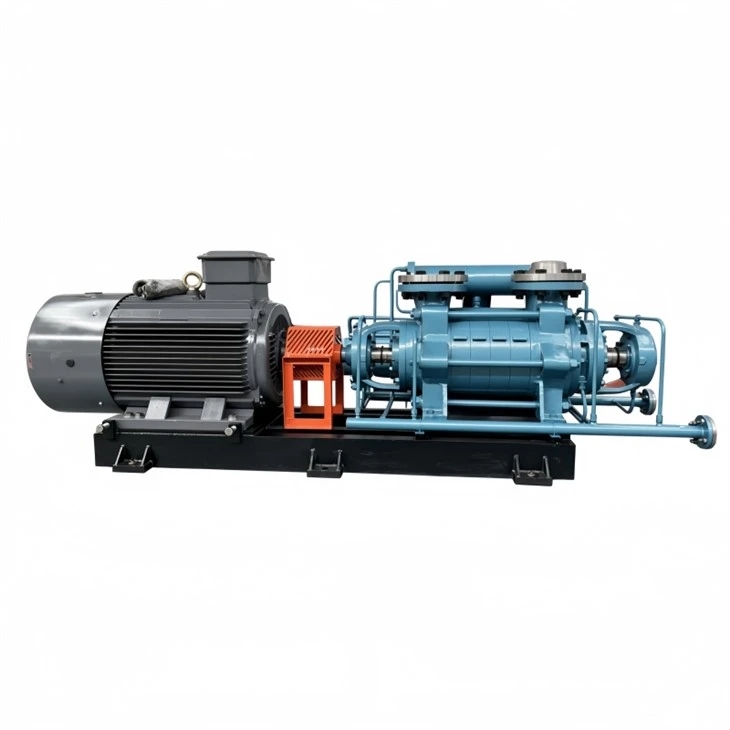
Our product portfolio includes high pressure multistage boiler feed pumps, horizontal multistage centrifugal pumps, self-balancing multistage pumps and API 610 pump solutions.
Depending on the product series, published specifications include:
- High Pressure Multistage Boiler Feed Pump: Flow rate up to 800 m³/h, head up to 1,000 m, liquid temperature up to 135°C.
- BB4 High Pressure High Temperature Boiler Feed Pump: Flow rate 20–540 m³/h, total head 16–1,500 m, liquid temperature up to 210°C.
These are published product range limits, not guaranteed operating points for every pump model. Final performance and suitability depend on the selected model and confirmed operating conditions.
Our in-house capabilities cover pump design, machining, assembly and performance testing. We also provide pump selection support, customized construction, sealing and material options, as well as engineering solutions for specific applications.
For a boiler feedwater project, our technical team can review the required flow, head, feedwater temperature, suction conditions and project specifications to identify a suitable pump solution.